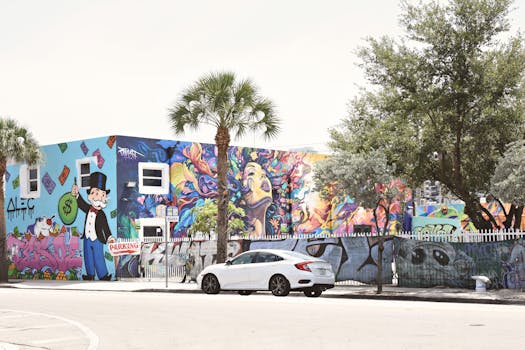
Murals and Graffiti: A Voice for the Marginalized
Art has long been more than just a means of personal expression—it is a powerful tool for social commentary and a catalyst for community dialogue. In cities across the world, murals and graffiti have emerged as vibrant mediums for those whose voices are often overlooked: the marginalized. From sprawling murals on city walls to the bold tags in urban alleys, these art forms offer a canvas for the stories, struggles, and aspirations of communities frequently left out of mainstream narratives. But how do murals and graffiti serve as a voice for the marginalized, and what impact do they have on society at large? This article delves into the origins, significance, and societal influence of these visual statements, highlighting their role in advocacy, identity, and change.
The Origins of Murals and Graffiti as Social Commentary
The use of public walls for artistic expression is not a modern phenomenon. Murals have roots in prehistoric cave paintings, but their transformation into a medium for social and political commentary accelerated in the 20th century. The Mexican Muralist movement of the 1920s, for example, saw artists like Diego Rivera and David Alfaro Siqueiros use large-scale public art to depict workers, indigenous peoples, and revolutionary ideals, giving visibility to marginalized groups.
Graffiti, similarly, evolved as a form of protest and identity, especially in the late 20th century. In New York City during the 1970s, young people—often from underprivileged backgrounds—used spray paint to tag subway cars and city walls. These acts were often dismissed as vandalism, but many tags and murals carried messages of resistance, pride, and cultural identity. According to a 2022 study by the International Journal of Arts and Society, over 70% of surveyed street artists reported that their work centered around themes of social justice or community representation.
.png)
Murals: Public Canvases for Collective Identity
Murals have the unique ability to transform bleak urban environments into vibrant visual narratives. Unlike graffiti, which is often associated with individual expression, murals are frequently collaborative projects involving local artists, residents, and community organizations. This collective approach fosters a sense of ownership and identity among marginalized communities.
A prominent example is the "Wall of Respect" in Chicago, painted in 1967 by artists from the Organization of Black American Culture. The mural celebrated African American leaders and became a catalyst for the nationwide community mural movement. Today, similar projects can be seen worldwide. In Belfast, Northern Ireland, political murals document the struggles and histories of Catholic and Protestant communities, providing insight into their marginalized experiences.
According to the Mural Arts Program in Philadelphia, which has created over 4,000 murals since its inception, public art projects have been linked to a 30% reduction in neighborhood blight and increased civic engagement. These murals often tackle issues such as immigration, racial justice, and LGBTQ+ rights, giving voice to those who are excluded from mainstream media.
Graffiti: The Raw Edge of Urban Expression
While murals are often sanctioned and celebrated, graffiti occupies a more contentious space. Often unsanctioned and sometimes illegal, graffiti is a raw, immediate form of expression, especially for youth and marginalized groups. Graffiti artists, or "writers," use urban spaces to assert their presence, communicate grievances, or simply to be seen in a society that often overlooks them.
In cities like São Paulo, Brazil, graffiti is not just tolerated but embraced as a legitimate art form. The city’s "Beco do Batman" (Batman Alley) is a living gallery of colorful tags and murals, many of which highlight social issues such as police violence, inequality, and indigenous rights. A survey by the São Paulo Department of Culture in 2023 found that 62% of residents viewed graffiti as a valuable form of cultural expression.
Graffiti has also played a critical role in political movements. During the Arab Spring uprisings, protestors in Egypt used graffiti to commemorate martyrs, mock political leaders, and rally support for change. In the United States, after the 2020 killing of George Floyd, cities saw an outpouring of graffiti demanding justice and police reform.
Art as Advocacy: Raising Awareness and Mobilizing Action
One of the most significant impacts of murals and graffiti is their ability to raise awareness and mobilize action around social issues. Unlike gallery art, these works are accessible to everyone, breaking down barriers of class, education, and privilege.
For example, in the favelas of Rio de Janeiro, muralists like Eduardo Kobra use public art to spotlight the challenges faced by residents, from poverty and police violence to environmental degradation. In Los Angeles, the "Great Wall of Los Angeles," a half-mile-long mural completed over several decades, chronicles the history of marginalized groups in California, including Native Americans, Latinx, Asian Americans, and LGBTQ+ individuals.
A 2021 report by Americans for the Arts found that 78% of people who engaged with public art projects felt more connected to their community and better informed about social issues. Murals and graffiti can serve as visual petitions, rallying points for protest, or simply reminders that marginalized voices matter.
Comparing Murals and Graffiti: Visibility, Legality, and Impact
Though murals and graffiti share many similarities, they differ in visibility, community involvement, and public perception. The table below summarizes some key contrasts:
| Aspect | Murals | Graffiti |
|---|---|---|
| Legality | Generally legal, often commissioned | Often unsanctioned or illegal |
| Community Involvement | High; collaborative projects | Low; typically individual or small groups |
| Visibility | Highly visible, designed for public consumption | Variable; sometimes hidden or fleeting |
| Societal Perception | Increasingly positive, seen as beautifying | Mixed; seen as vandalism or protest |
| Impact on Marginalized Voices | Strong; platform for collective stories | Strong; direct, urgent individual expression |
Despite their differences, both murals and graffiti remain powerful voices for those on society’s margins.
Challenges and Controversies: Whose Voice Gets Heard?
While murals and graffiti amplify marginalized voices, they are not without controversy. Critics argue that gentrification can co-opt street art, turning expressions of resistance into sanitized tourist attractions. In some neighborhoods, murals designed by outsiders may unintentionally misrepresent or overshadow local experiences.
Furthermore, the criminalization of graffiti disproportionately affects young people of color. In New York City, for example, over 85% of those arrested for graffiti-related offenses in 2021 were Black or Latino, according to NYPD data. This raises important questions about whose art is celebrated and whose is criminalized.
There is also ongoing debate about the preservation of street art. Some works, such as the murals by anonymous artist Banksy, have become highly valued and protected. Others are erased or painted over, prompting debates about ownership, censorship, and the transient nature of public art.
The Global Reach: Murals and Graffiti Across Continents
From the barrios of Mexico City to the streets of Johannesburg, murals and graffiti offer a universal language for those on the margins. In Palestine, the West Bank barrier is covered with art protesting occupation and calling for peace. In India, Dalit artists use wall paintings to challenge caste discrimination. In Australia, Indigenous artists reclaim public spaces with vibrant visual stories.
UNESCO has recognized the importance of street art in promoting cultural diversity and dialogue. In 2023, over 120 countries participated in International Mural Festivals, highlighting the global scale and relevance of these art forms. Some cities, such as Bogotá, Colombia, have even established legal graffiti zones, fostering creative expression while reducing illegal tagging.
Conclusion
Murals and graffiti are far more than urban decoration—they are vital, living testimonies to the resilience, creativity, and demands of marginalized communities. Whether sanctioned or unsanctioned, collaborative or individual, these public artworks challenge the status quo, open conversations, and inspire change. In giving voice to the voiceless, murals and graffiti remind us that every wall can tell a story, and every city has a heart that beats in color and protest.